Using a cement mixer: drum sizes, 110 V or 230 V, and protecting your skin from cement
Checked 23 November 2026
What a mixer’s drum and mixing capacities mean, choosing mains, 110 V, petrol or battery power, and HSE’s advice on cement burns, dermatitis and dust.
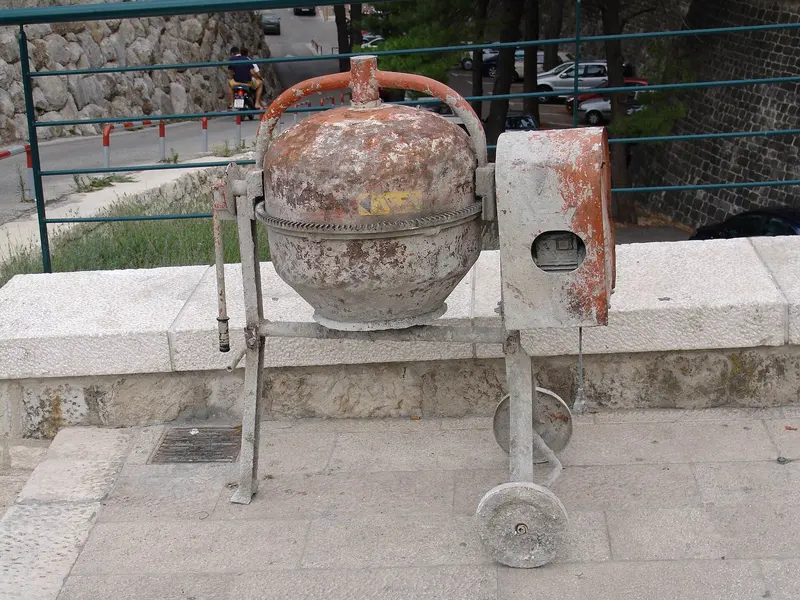
A small drum mixer saves a lot of shovelling on a patio, a garden wall or a shed base. The machine itself is simple; the things that catch people out are the power supply and the cement, which HSE warns can cause serious burns. This guide uses Altrad Belle’s figures for the cement mixers on this site and HSE’s guidance on cement and electrical safety.
Drum capacity and mixing capacity
A mixer has two volume figures, and the smaller one is the one that counts.
- Drum capacity is the size of the drum.
- Mixing capacity is how much concrete or mortar it can actually mix in one go.
All three Belle mixers we list have a 130 litre drum and a 90 litre mixing capacity, which Belle describes as a full barrow load. Overfilling past the mixing capacity spills material and strains the motor and gearbox.
Drum speed varies a little: Belle gives 26.5 rpm for the Minimix 130 and 24 rpm for the Minimix 150 and the battery Minimix 150E+. Each comes with a barrow-height stand, so you can tip the mix straight into a wheelbarrow.
Weight matters when you move or lift a mixer. Belle gives 34 kg for the Minimix 130 (stand 7.7 kg), 55.5 kg for the electric Minimix 150 and 61 kg for the petrol versions (stand 9.5 kg), and 59 kg for the 150E+ without its stand or battery. Get help to lift it onto and off the stand.
Choosing the power: 230 V, 110 V, petrol or battery
- 230 V mains is the everyday choice at home. The Minimix 130 has a 0.45 kW motor; the electric Minimix 150 has 0.55 kW, an enclosed motor sealed to IP45 and a no-volt release (NVR) switch, which stops it restarting by itself after a power cut.
- 110 V versions of the Minimix 150 exist for building sites. HSE says tools, plugs and cables designed for DIY and domestic use are not suitable for site conditions; its advice is cordless tools or tools on a 110 V centre-tapped-to-earth supply, which keeps the voltage to earth no higher than 55 V. A 110 V mixer needs a site transformer — it won’t plug into a house socket.
- Petrol versions (Honda GX120 or Loncin engines) need no supply at all, but bring exhaust and fuel storage: run them outdoors only, and see storing petrol at home.
- Battery: Belle says the Minimix 150E+ (82 V maximum, 72 V nominal) manages about 20 mixes on its 5 Ah battery and 30 on the 8 Ah battery, based on three minutes a mix, and charges to 80% in 28 and 48 minutes respectively.
For a mains mixer outdoors, HSE says an RCD should trip at no more than 30 mA, and that plug-in RCDs should be tested with their test button before use. Check the plug and cable with the machine unplugged, and keep the cable out of the wet mix and away from the barrow route. Our article on petrol, battery or mains covers the trade-offs in more detail.
Cement is the real hazard
HSE’s guidance on cement is blunt. Wet cement is highly alkaline, and if it is trapped against the skin — inside a boot or a glove, or under a knee — a serious burn or ulcer can develop quickly. In extreme cases these have needed skin grafts or led to amputation. Cement can also cause chemical burns to the eyes.
It causes two kinds of dermatitis:
- irritant dermatitis, because it is abrasive and alkaline
- allergic dermatitis, from the hexavalent chromium (chromate) it contains. Makers add an ingredient to reduce this, but it only works for a limited time, shown by the shelf date on the bag. HSE says once someone is sensitised, any future exposure may set it off.
Cement powder irritates the lungs, and HSE warns that dust from cutting or drilling dried concrete and mortar can cause more serious lung disease.
HSE’s precautions
- Avoid handling cement powder where you can — ready-mixed concrete or mortar does that — and use bags before their shelf date.
- Gloves: waterproof gloves suitable for alkalis, marked EN 374 and tested for “alkalis and bases”. They should be long or tight at the cuff so cement can’t get trapped inside.
- Boots: wellingtons or similar, tall enough that wet concrete can’t get in over the top, with trousers worn over the boots.
- Kneeling: wear waterproof trousers or use waterproof knee pads or a board, and keep time spent kneeling to a minimum.
- Wash it off any skin as soon as possible, with warm running water and soap.
- Moisturise afterwards to help replace the skin’s natural oils, which keep its protective barrier working.
Wear eye protection when tipping powder into the drum or breaking up old concrete — see eye, face and breathing protection. HSE’s guidance includes emergency eyewash for cement in the eyes, so keep clean eyewash or water to hand.
After the job
Clean the drum before the mix sets, with the machine switched off and unplugged (or the engine stopped) before you reach into it. Belle also sells an optional MixerLock for the Minimix 150. Read the maker’s manual for the cleaning and maintenance routine — it comes first.
General information only. Always read and follow the maker’s manual and safety instructions, wear the protection it tells you to, and keep children and pets away from machinery. This guide summarises official and makers’ guidance; it isn’t legal or professional advice.
Sources
- HSE: Cement — health risks and precautions in construction (checked 23 November 2026)
- HSE: Electricity — systems in buildings (110 V CTE on site) (checked 23 November 2026)
- HSE: Work using electrically powered equipment (RCDs and checks) (checked 23 November 2026)
- Altrad Belle: Minimix 130 (checked 23 November 2026)
- Altrad Belle: Minimix 150 (checked 23 November 2026)
- Altrad Belle: Minimix 150E+ (checked 23 November 2026)
Checked 23 November 2026.