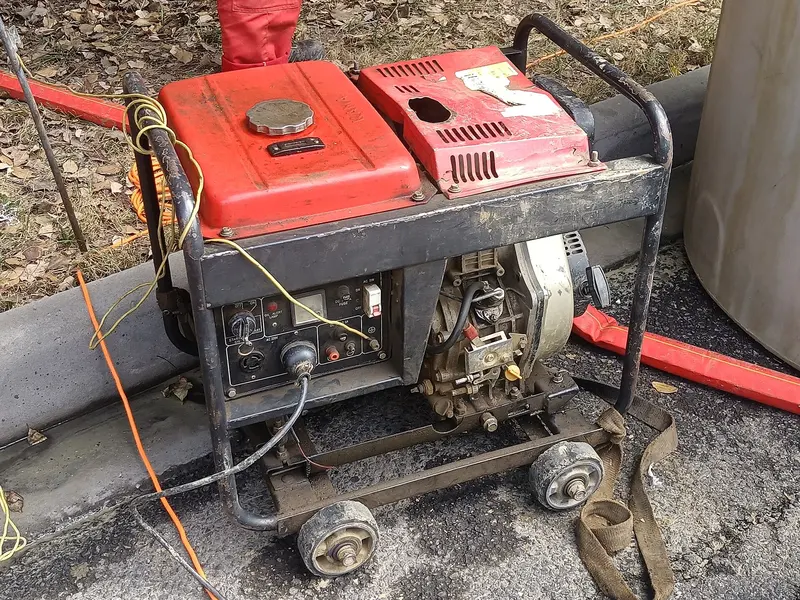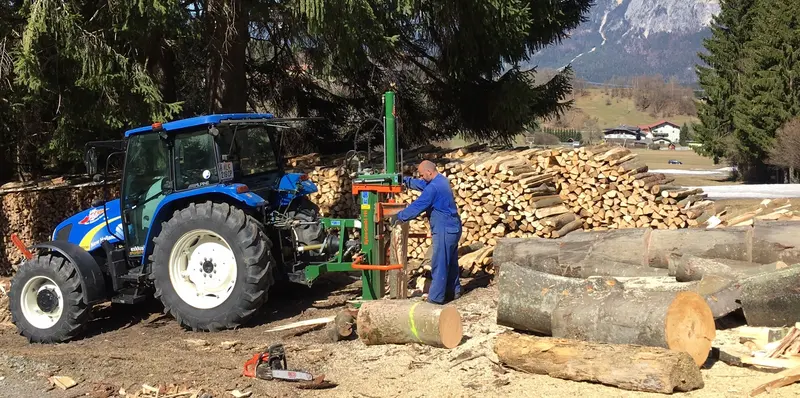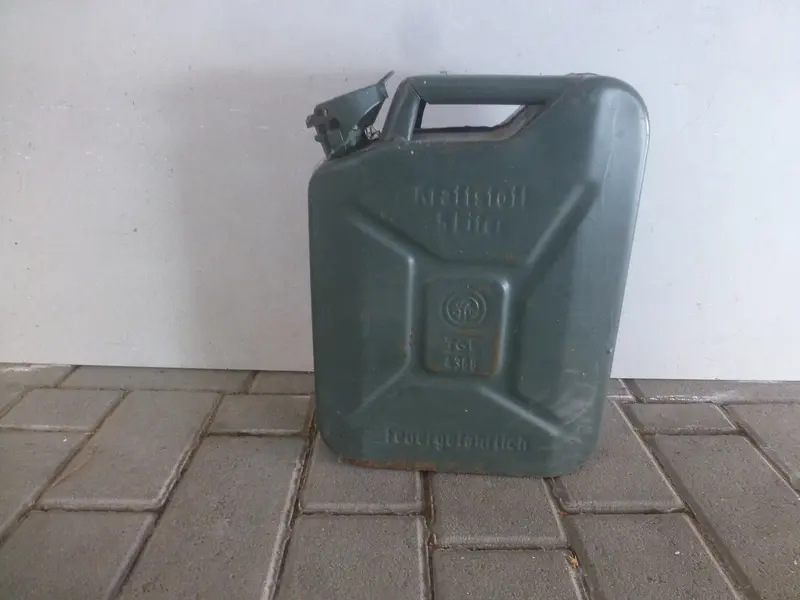
Since September 2021 the standard petrol at most pumps in Great Britain has been E10 (Northern Ireland followed in November 2022). Most car owners never noticed. Owners of small engines — generators, log splitters, chipper shredders, cement mixers, mowers — have more reason to check, because the government's own guidance names their machines.
What E10 is
GOV.UK explains that E10 petrol contains up to 10 per cent renewable ethanol. The fuel it replaced as the standard grade, E5, has up to 5 per cent. Honda describes it the same way: the "10" is simply the maximum ethanol content allowed.
E5 hasn't gone away. GOV.UK says it is still sold as the "super" grade (97 octane or above) at filling stations that sell two grades of petrol, although some smaller or rural stations sell only one.
Does it suit my machine?
GOV.UK lists petrol-powered garden equipment or machinery, such as lawnmowers and chainsaws, among the things that may not be compatible, and says owners should check their manual or ask the manufacturer or dealer before using E10. The online E10 checker covers cars, motorcycles and mopeds — not machinery — so for a generator or splitter the manual and the maker are the places to look.
Some makers have published a statement. Honda, for example, says all its power equipment products with petrol engines produced for the EU market since the 1993 model year are compatible with E10, while noting that some petrol engines, especially older ones, may face material compatibility issues. Honda asks owners who are unsure to contact its customer service with the machine's full serial number.
Many machines on this site use engines from other makers (Briggs & Stratton, Loncin, or the machine maker's own engine). Look in the manual for the engine as well as the machine.
If you're unsure, use E5 "super" unleaded until you have checked. GOV.UK's advice for vehicles is the same: if in doubt, stick with E5.
Filled up with the wrong one?
GOV.UK's guidance (written for vehicles) says that a single tank of E10 in a non-compatible engine should not be a major problem and you don't need to drain it — just fill up with E5 next time. Prolonged use, however, may cause harm and isn't recommended. For a machine, check what the maker says.
Old fuel is the bigger problem
For machines that stand unused for months, stale fuel causes more trouble than the grade. Honda's lawn and garden advice notes that fuel deteriorates over time, which can make petrol machines hard to start, and recommends emptying the tank and the carburettor before storing a machine. Many manuals say the same, or describe how to use a fuel stabiliser instead. Follow your own machine's manual, because the right method varies.
Good habits that help with any petrol:
- Buy only what you'll use in a reasonable time, rather than filling a big can in spring and finishing it in autumn.
- Label cans with the date you filled them and the grade.
- Store it properly. HSE allows up to 30 litres at home without notifying anyone — up to 10 litres in a suitable plastic container or 20 litres in a metal one, and never in your living space. See storing petrol at home.
- Refuel outdoors with the engine off and cool, away from anything that could ignite vapour.
- Dispose of old petrol properly. Don't pour it down a drain or on the ground — ask your council where its household waste site takes it.
Machines on the site with petrol engines
Generators
Honda EU22i
- Key figures
- 2,200 W max · 1,800 W rated
- Power
- Petrol (GXR120 engine), inverter
- Good for
- Site tools, mobile repairs, camping and back-up power
A mid-size inverter generator with two sockets, which Honda says is easy to carry at around 21 kg.
Details of Honda EU22i Search Amazon for this — Honda EU22i (opens Amazon.co.uk)
Log splitters
SIP 8 Ton Petrol Log Splitter (01987)
- Key figures
- 8 tonne · logs 70–300 mm diameter, 120–520 mm long
- Power
- Petrol (196 cc OHV, 6.5 hp)
- Good for
- Splitting in the field or woodland, away from mains
A petrol-engined horizontal splitter on rough-terrain wheels, so you can take it to the wood pile instead of the other way round.
Details of SIP 8 Ton Petrol Log Splitter (01987) Search Amazon for this — SIP 8 Ton Petrol Log Splitter (01987) (opens Amazon.co.uk)
Garden shredders
STIHL GH 460
- Key figures
- Branches up to 60 mm
- Power
- Petrol (Briggs & Stratton Series 850 EXi, 190 cm³)
- Good for
- Woody branches and soft green waste, away from mains
A petrol chipper/shredder with two filling openings: one for woody branches and one for softer green waste.
Details of STIHL GH 460 Search Amazon for this — STIHL GH 460 (opens Amazon.co.uk)
Cement mixers
Belle Minimix 150
- Key figures
- 130 l drum · 90 l mix · 24 rpm
- Power
- Petrol (Honda GX120 or Loncin) or electric (110 V / 230 V)
- Good for
- Small to medium building jobs; site and hire use
A heavier-duty tip-up mixer built for site and hire use, available with petrol or electric drive.
Details of Belle Minimix 150 Search Amazon for this — Belle Minimix 150 (opens Amazon.co.uk)
As an Amazon Associate we earn from qualifying purchases. Most Amazon links open a search on Amazon.co.uk, where you can see the current price, sellers and delivery. We don’t show prices, ratings or Amazon’s photos.
If you're choosing between petrol and something else, our article on petrol, battery or mains sets out the trade-offs. For storage and fuel, a metal jerry can or plastic petrol can should be marked as suitable for petrol. And for anything with an engine, read generators and carbon monoxide: exhaust fumes are the reason engines only ever run outdoors.