Cordless drills, saws, hedge trimmers, mowers and even some welders and compressors now run on lithium-ion batteries — and many will be unwrapped this Christmas. They're convenient and generally safe, but a damaged battery, or the wrong charger, can start a fire. London Fire Brigade (LFB) publishes clear advice on lithium-ion batteries. It's written mainly for e-bikes and e-scooters, which have larger batteries, but the same habits apply to tool batteries. Your tool's manual comes first.
Use the right charger
LFB says to use the charger that came with the battery, or one the manufacturer recommends, and to buy replacements only from reputable sellers, because “Using the wrong charger can overload the battery.” Electrical Safety First makes the same point about buying from a reputable retailer rather than an unknown online seller — counterfeit electrical goods may not meet safety standards.
Where and when to charge
LFB's advice:
- don't charge while you're out or asleep
- let the battery cool after use before you plug it in
- charge on a firm, level surface that lets heat escape — not on soft furnishings or beds
- keep batteries away from escape routes and exits
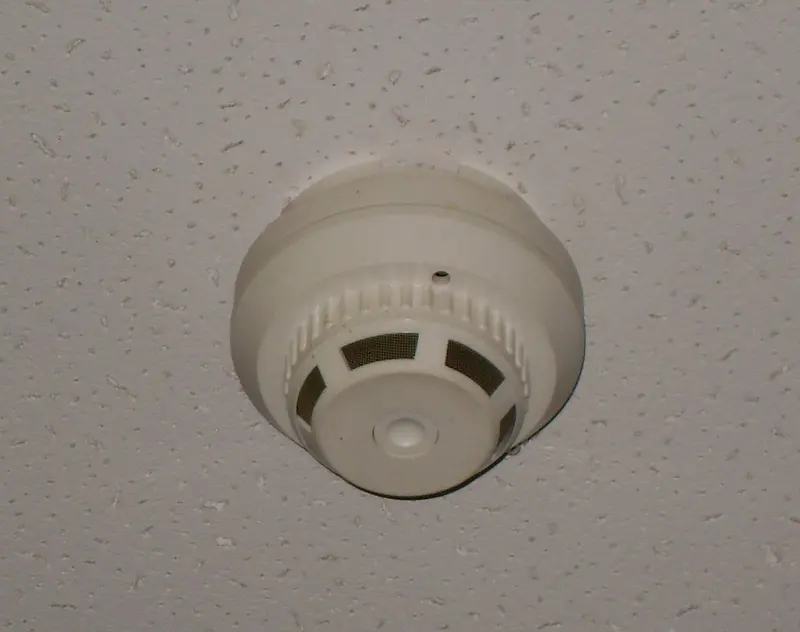
- fit a smoke alarm in the area where you charge
- unplug the charger once the battery is full
- protect batteries from extreme heat or cold
A workbench in the house or a utility room with a smoke alarm is a better place than the hallway by the front door. Our post on getting machinery ready for winter covers storing batteries over the cold months.
Warning signs
LFB lists signs that a battery may be failing:
- it gets extremely hot to the touch (some warmth is normal)
- it looks swollen or misshapen, or has lumps
- strong chemical smells
- hissing or cracking sounds
- leaks or damage to the casing
- smoke
If you notice any of these, LFB says to stop using the battery, switch off the device, unplug it and contact the manufacturer or retailer. It also says not to charge or use a battery that has been dropped or damaged.
If it catches fire
LFB's advice is clear: if the battery starts smoking, get out, raise the alarm and call 999 — don't try to fight the fire yourself. LFB warns that these fires can spread rapidly and produce toxic smoke.
Cordless tools as presents
If a cordless tool is going under the tree, a few checks help: buy from a retailer you trust, keep the manual with the box, and check the battery and charger are the ones listed for that tool. Once it's unwrapped, register it with the maker if they offer that, so you hear about any safety recall — our post on checking for product recalls explains how to search the government's list. Charge it for the first time while you're at home and awake, following the times in the manual.
Mixing brands
Many makers build a range of tools around one battery platform. Use only the batteries and chargers the tool's maker says are compatible — adaptors and look-alike batteries aren't covered by that advice.
Garden shredders
Bosch UniversalShredder 2x18V-25
- Key figures
- Branches up to 25 mm
- Power
- Cordless (two 18 V POWER FOR ALL batteries)
- Good for
- Prunings up to 25 mm, away from a socket
A cordless shredder that runs on two 18 V batteries, for prunings up to 25 mm.
Details of Bosch UniversalShredder 2x18V-25 Search Amazon for this — Bosch UniversalShredder 2x18V-25 (opens Amazon.co.uk)
Pressure washers
Bosch UniversalAquatak 36V-100
- Key figures
- Max 100 bar · 1.7–3.1 l/min · up to 45 min per charge
- Power
- 36 V battery (POWER FOR ALL)
- Good for
- Medium-sized cleaning jobs away from a socket
A cordless pressure washer that can draw from a water butt or container, so it works where there is no mains socket or tap nearby.
Details of Bosch UniversalAquatak 36V-100 Search Amazon for this — Bosch UniversalAquatak 36V-100 (opens Amazon.co.uk)
Welders
SIP WELDMATE 180A ARC/TIG Cordless Battery Welder (05712)
- Key figures
- ARC 10–180 A · 60 A at 100% duty · 740 Wh battery
- Power
- Built-in lithium-ion battery (charges from 230 V)
- Good for
- Field repairs on farms and sites with no power
A stick and TIG welder with its own battery, for repairs where there is no mains supply.
Details of SIP WELDMATE 180A ARC/TIG Cordless Battery Welder (05712) Search Amazon for this — SIP WELDMATE 180A ARC/TIG Cordless Battery Welder (05712) (opens Amazon.co.uk)
As an Amazon Associate we earn from qualifying purchases. Most Amazon links open a search on Amazon.co.uk, where you can see the current price, sellers and delivery. We don’t show prices, ratings or Amazon’s photos.
Disposing of old batteries
LFB says lithium-ion batteries should not go in the same bins as your regular rubbish or recycling, because damaged or overheating batteries can start fires. Check your council's website for local arrangements, or use the Recycle Your Electricals locator to find a drop-off point. Our post on getting rid of old machinery covers the tools themselves.
Choosing between battery, mains and petrol
If you're still deciding what to buy, see petrol, battery or mains — it covers runtime, noise and where each kind of power makes sense.