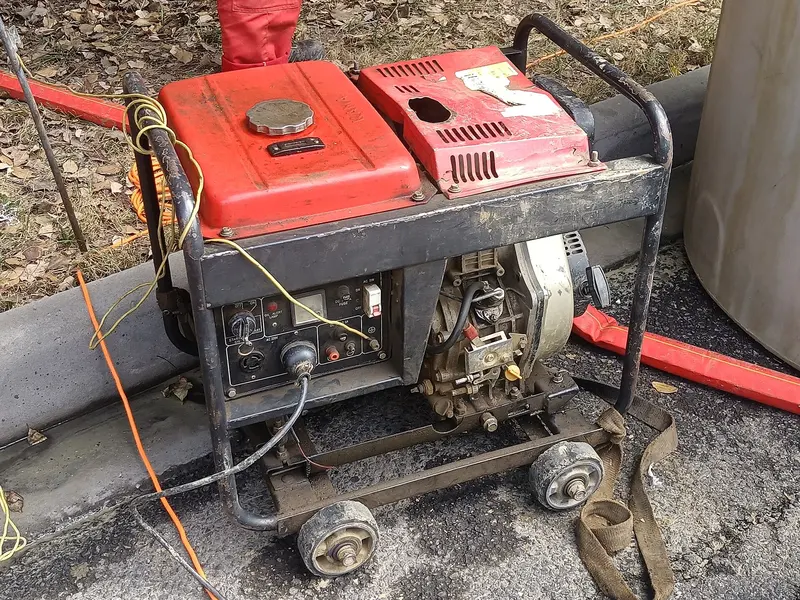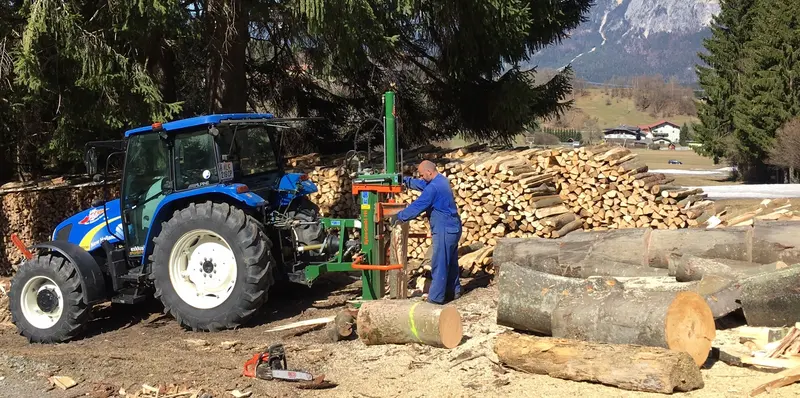
A shredder on a Sunday morning, a compressor cycling in a garage, a generator humming at the bottom of the garden — machinery noise is one of the easiest ways to fall out with the people next door. It also matters for your own hearing. This article covers the second part only briefly (see noise and hearing protection) and concentrates on neighbours.
Reading the decibel figures
Makers give noise in decibels, usually written dB(A) — the "A" means the measurement is weighted to match how human ears hear. You'll often see two kinds of figure:
- Sound pressure level (often LpA): roughly how loud it is at the operator's position.
- Sound power level (often LWA): how much noise the machine gives out in total. This number is higher and is the one to compare between models.
Decibels don't add up like ordinary numbers. HSE puts it simply: every 3 dB doubles the noise, so what look like small differences can be quite significant — even though you might only just notice a 3 dB change, because of the way our ears work. A machine rated 6 dB lower than another is putting out a quarter of the sound energy.
The label on outdoor machines
Many outdoor machines — GOV.UK lists examples such as lawnmowers, leaf blowers, chainsaws and power generators — must carry a standard label showing their guaranteed sound power level. That makes it possible to compare like with like before you buy. Where a maker gives a noise figure, our product pages and spec plates repeat it as the maker states it.
What counts as a nuisance
There is no single national "quiet hours" rule for using machinery at home. Instead, councils in England must look into noise that could be a statutory nuisance under the Environmental Protection Act 1990. GOV.UK says the noise must either unreasonably and substantially interfere with the use or enjoyment of a home or other premises, or injure (or be likely to injure) health.
Councils can investigate statutory nuisance at any time of day or night. If they find one, they must serve an abatement notice requiring the noise to stop or be limited; ignoring it is an offence.
Night-time: 11pm to 7am
Night is treated more strictly. Between 11pm and 7am, councils can serve a warning notice for noise from a home that goes above a permitted level, even if it isn't a statutory nuisance. GOV.UK gives the permitted level, measured inside the complainant's home, as 34 dBA where the background noise is no more than 24 dBA, or 10 dBA above the background where it is higher. Not complying can lead to a fixed penalty or prosecution.
Building work has its own route: councils can serve notices on construction work setting the hours, the machinery used and the noise levels.
Check your own council's website too. Councils set their own service levels for noise complaints and many publish guidance on reasonable hours for DIY and garden machinery.
Keeping the peace
- Choose quieter machines where you can. Compare the makers' dB figures, and look for designs sold as low-noise, such as slow-running compressors.
- Pick your time. Reasonable daytime hours, not early mornings, late evenings or the middle of a neighbour's barbecue.
- Talk first. Telling the neighbours you'll be splitting logs on Saturday afternoon goes a long way.
- Keep machines maintained. HSE's woodworking advice includes keeping machines and extraction well maintained and using quieter tooling; a blunt blade or loose panel is often a noisy one.
- Put distance and walls to work. Run a generator or compressor away from boundaries and windows — and a generator always outdoors and at least a metre from buildings, as the makers insist.
- Enclose noisy kit with care. HSE suggests enclosures round noisy machines at work. Never box in an engine: it needs air, and its exhaust must go outdoors.
Quieter options on the site
These compressors are ones their makers describe as quieter or low-noise, and the Bosch shredder uses a slow-turning cutter rather than a fast-spinning blade:
Air compressors
SIP QT DD 1.5hp 24 Litre Ultra Low Noise Compressor (05491)
- Key figures
- 24 l tank · 6.5 CFM free air delivery · 8 bar
- Power
- Mains electric (230 V, 13 A), 1.1 kW
- Good for
- Quiet home workshops: inflation, nailing, stapling, airbrushing
An oil-free direct-drive compressor that SIP rates at just 59 dB, with a slow-running four-pole motor.
Details of SIP QT DD 1.5hp 24 Litre Ultra Low Noise Compressor (05491) Search Amazon for this — SIP QT DD 1.5hp 24 Litre Ultra Low Noise Compressor (05491) (opens Amazon.co.uk)
Air compressors
Einhell TE-AC 240/24 Silent
- Key figures
- 24 l tank · 10 bar · 240 l/min intake (92 l/min at 7 bar)
- Power
- Mains electric, 1,500 W
- Good for
- Garage and workshop air tools, tyres and blowing
An upright, oil-free 24 litre compressor that Einhell describes as quieter than conventional compressors of the same performance.
Details of Einhell TE-AC 240/24 Silent Search Amazon for this — Einhell TE-AC 240/24 Silent (opens Amazon.co.uk)
Garden shredders
Bosch AXT 25 TC
- Key figures
- Branches up to 45 mm · 2,500 W · 53 l box
- Power
- Mains electric
- Good for
- Garden prunings up to 45 mm
A slow-turning “Turbine-Cut” shredder: its cutter turns at 40 rpm rather than spinning a blade at high speed.
Details of Bosch AXT 25 TC Search Amazon for this — Bosch AXT 25 TC (opens Amazon.co.uk)
As an Amazon Associate we earn from qualifying purchases. Most Amazon links open a search on Amazon.co.uk, where you can see the current price, sellers and delivery. We don’t show prices, ratings or Amazon’s photos.
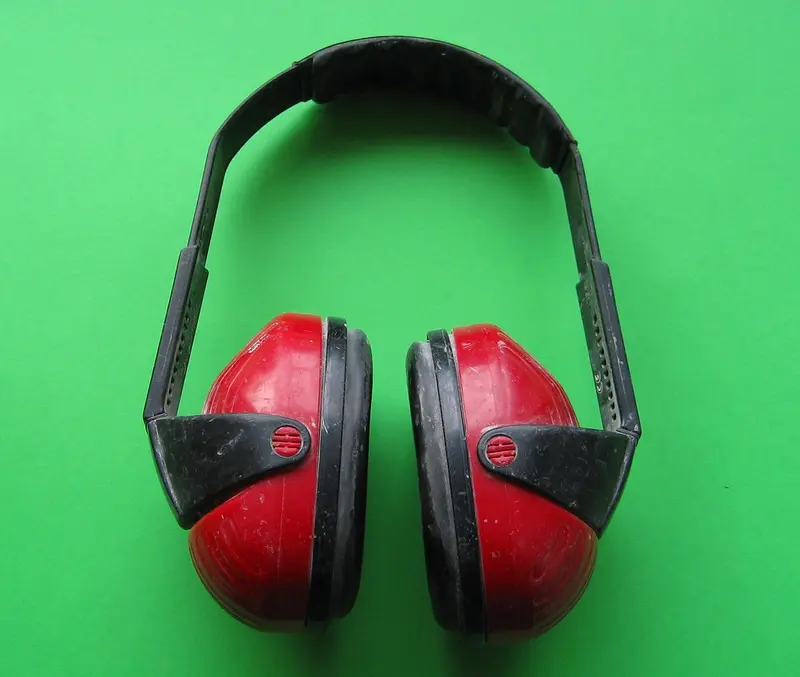
And protect yourself while you're at it: ear defenders or earplugs rated for the job. Our guide to noise and hearing protection explains SNR ratings.