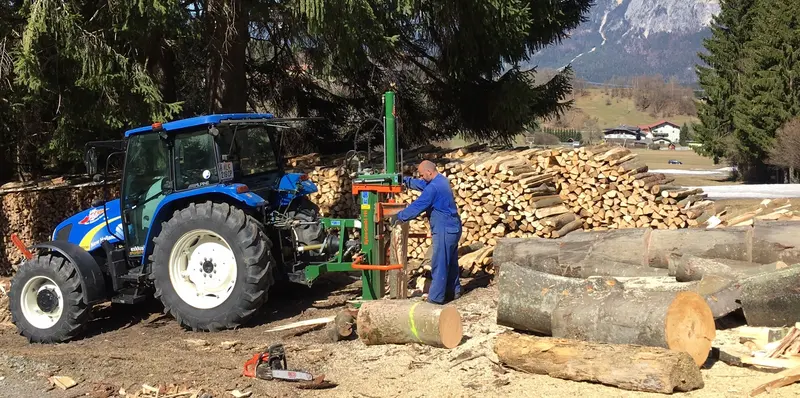
Some machines earn their keep every week. Others come out once a year — a cement mixer for a patio, a log splitter for a delivery of logs, a big shredder after a hedge has been cut back. Hiring is often the sensible answer for the second kind. This article looks at how to weigh it up and what to check when you collect a hired machine.
Questions to ask yourself
- How often will I use it? A machine you'll use every month is a different decision from one you'll use for a weekend.
- Where will I keep it? A mixer, a petrol splitter or a table saw takes up real space, and petrol machines bring the storage rules for fuel (see storing petrol at home).
- Who will look after it? Engines need oil changes and winter preparation; blades and wheels need sharpening or replacing; extractors need filters. With hire, most of that is the hire firm's job.
- Does the job need something bigger than I'd buy? Hire shops may carry heavier, site-grade versions of a machine.
- Do I know how to use it? Hiring a machine you've never used means learning on the day. Ask for a demonstration and the manual.
There is no right answer, but if you can't think of a second job for a machine within a year or so, hiring is worth pricing up before you buy.
What the hire firm is responsible for
HSE's guidance is written for work equipment, but it is a useful picture of who does what. HSE says that firms hiring out equipment for use at work are treated as suppliers under health and safety law. That means, so far as reasonably practicable, pre-hire testing and inspection to make sure the equipment is still safe, and providing information about it. Hired equipment should come with user instructions and the right markings.
Where a hire firm keeps control of the equipment, it also has duties under PUWER — the Provision and Use of Work Equipment Regulations — which require equipment to be suitable, maintained in good repair and inspected where it can deteriorate. Our guide to machinery safety at home and at work explains PUWER in plain English.
What stays with you
HSE is clear that hire firms can't normally be responsible for the day-to-day and other pre-use checks — those are for the user, unless the hire agreement says otherwise. So before you start, and each day you use it:
- Walk round the machine. Guards in place, nothing cracked, loose or missing.
- Check the plug, cable and any extension lead for damage, as HSE advises for all electrical equipment — and on hired leads in particular, since you don't know their history.
- For an engine, check the oil and fuel level as the manual describes, and only refuel with the engine cool.
- Make sure you have the protective equipment the manual asks for. Some hire shops sell or include it; many don't.
- Keep the instructions with the machine and read them before first use.
If you are hiring for a business, the duties under PUWER apply to you as well: equipment used at work, hired or not, must be suitable, maintained and used by people with adequate training and information.
Reduced-voltage tools
On building sites, power tools often run at 110 V from a transformer. HSE describes this reduced-voltage set-up — a transformer with a centre tap to earth, which halves the voltage between a live wire and earth — as a safer choice in damp conditions, and notes such equipment is readily available from hire shops. If you hire 110 V tools you'll need the transformer too; they won't plug into a 230 V socket.
Petrol machines on hire
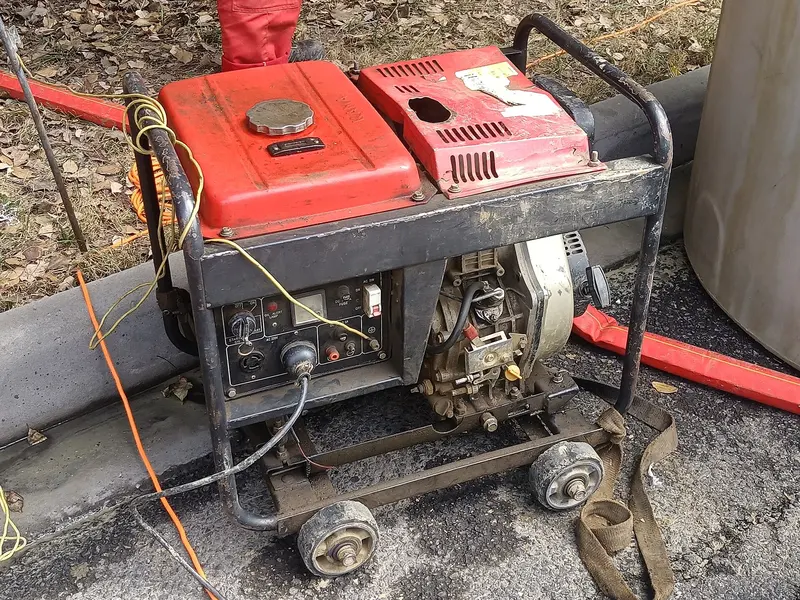
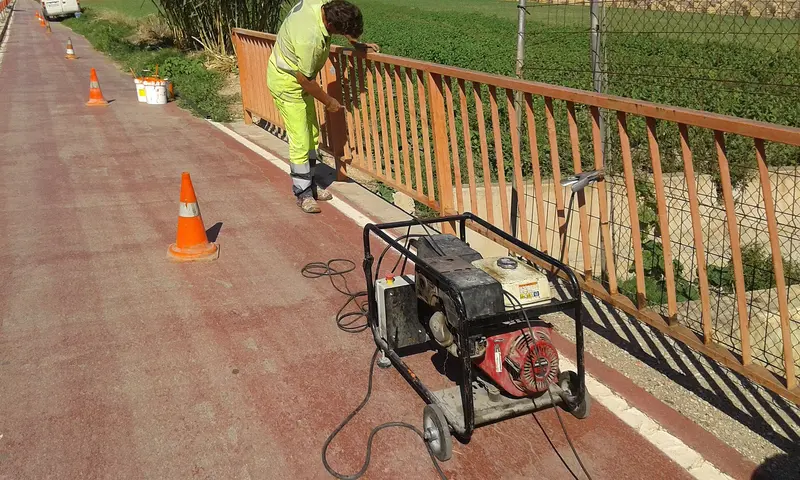
Hired petrol machines come with the same rules as your own. Honda's safety advice applies to any engine: never run it in a confined or partly confined space, because of carbon monoxide, and keep a generator at least a metre from buildings while it runs. Our guide to generators and carbon monoxide has the detail.
If you decide to buy
If the sums and the storage work out, our product pages give each maker's own figures, the power source and a safety note, with links to the maker and to Amazon.co.uk. Machines that suit occasional jobs include smaller electric log splitters and mixers:
Log splitters
SIP 5 Ton Horizontal Electric Log Splitter (01976)
- Key figures
- 5 tonne · logs 50–250 mm diameter, 200–520 mm long
- Power
- Mains electric (230 V, 13 A), 2.2 kW
- Good for
- Home firewood in manageable lengths
A horizontal splitter inside a safety cage, with a wedge that returns on its own after each split. SIP says it suits softwoods and hardwoods for home use.
Details of SIP 5 Ton Horizontal Electric Log Splitter (01976) Search Amazon for this — SIP 5 Ton Horizontal Electric Log Splitter (01976) (opens Amazon.co.uk)
Cement mixers
Belle Minimix 130
- Key figures
- 130 l drum · 90 l mix · 26.5 rpm
- Power
- Mains electric (230 V), 0.45 kW
- Good for
- Concrete and mortar for smaller jobs
A light tip-up mixer that works on or off its stand, for concrete and mortar.
Details of Belle Minimix 130 Search Amazon for this — Belle Minimix 130 (opens Amazon.co.uk)
Garden shredders
Bosch AXT Rapid 2200
- Key figures
- Branches up to 40 mm · 2,200 W
- Power
- Mains electric
- Good for
- Garden prunings up to 40 mm
A blade-type shredder: a cutting blade spins at 3,650 rpm, and the machine weighs much less than the slow-turning type.
Details of Bosch AXT Rapid 2200 Search Amazon for this — Bosch AXT Rapid 2200 (opens Amazon.co.uk)
As an Amazon Associate we earn from qualifying purchases. Most Amazon links open a search on Amazon.co.uk, where you can see the current price, sellers and delivery. We don’t show prices, ratings or Amazon’s photos.
Before buying, it is worth reading choosing a log splitter or the guide for whichever machine you have in mind. And whichever way you go, follow the maker's manual.